

Fresh Roasted Coffee vs Store Bought: 2026 Comparison
Table of Contents
- Fresh Roasted Coffee vs Store Bought: The Core Differences
- How Oxidation and Degassing Change Your Coffee
- Coffee Roast Date vs Expiration Date: What Actually Matters
- How to Store Coffee Beans for Maximum Freshness
- The Best Single Origin Coffee Beans Online
- Cost Per Cup: Fresh Roasted vs Store Bought
- How to Tell If Your Coffee Beans Are Stale
- Conclusion
- Frequently Asked Questions
Last Updated: September 10, 2026
Fresh Roasted Coffee vs Store Bought: The Core Differences
Fresh roasted coffee is coffee that has been roasted within days of reaching your grinder, while store bought coffee typically sits in a warehouse and on a shelf for months before purchase. That gap in time is the entire story. At Quire Brew, we roast single-origin beans to order specifically because the window between roasting and brewing determines almost everything you taste in the cup.
The comparison comes down to three things: time since roasting, how the beans were handled, and what you pay per cup. Below, we'll show you exactly how oxidation, degassing, and storage change your coffee, and how to tell whether the bag in your pantry is already past its peak.
How Oxidation and Degassing Change Your Coffee
Two separate chemical processes decide how your coffee tastes, and they run on different clocks. Understanding both is the difference between guessing at freshness and knowing it.
Oxidation is the reaction between oxygen and the volatile oils and aromatic compounds inside a roasted bean. Those compounds, the fruity esters in a natural Ethiopia, the cocoa and nut notes in a Brazil, are what you actually taste. Oxygen breaks them down over time, and the oils eventually turn rancid. This is the process that makes old coffee taste flat, papery, or like cardboard.
Degassing is the release of carbon dioxide that gets trapped inside the bean during roasting. A freshly roasted bean can hold several times its own volume in CO2, and it vents that gas over days to weeks (peer-reviewed research). Degassing is not the enemy, it is a necessary stage. But it matters because CO2 displaces oxygen inside the bag. While a bean is still actively degassing, that cushion of gas is slowing oxidation down. Once degassing finishes, oxygen moves in freely and the clock speeds up.
Why the rest period depends on roast level
This is where most guides stop, and where the practical answer actually lives. You do not want to brew coffee the hour it was roasted, and you do not want to wait a month either. The sweet spot shifts with roast level:
- Light roasts are denser and hold more CO2, so they degas more slowly. A common pattern is to rest them 7 to 14 days after the roast date before they hit peak. Brew too early and the escaping CO2 repels water, causing an uneven, gassy, sour extraction.
- Medium roasts tend to peak around 4 to 10 days off roast. This is the most forgiving window and the reason many roasters ship medium beans within a day or two of roasting.
- Dark roasts are more porous and shed CO2 quickly. They often peak within 3 to 7 days and then decline fastest, because the darker roast has already driven off more of the delicate aromatic oils.
For espresso specifically, the rest period matters even more than for drip. Espresso forces water through a compact puck under pressure, so trapped CO2 fights the extraction directly. Baristas commonly rest espresso beans longer than filter beans for this reason, sometimes a week or more, to let the puck behave predictably.
Store bought coffee has almost always finished degassing long before you open the bag. By the time it reaches your shelf, the CO2 cushion is gone and oxidation has had weeks or months to work. That is why it tastes flat rather than bright, not because it was roasted badly, but because the protective phase ended long before you brewed it.
Coffee Roast Date vs Expiration Date: What Actually Matters
The roast date is the only date that tells you anything useful about freshness. An expiration date is a legal and logistical label tied to shelf stability, not to peak flavor, and it can be printed months after roasting.
A common mistake is trusting a "best by" date printed six months out. That date exists so the product can survive a supply chain, not so you get a good cup. When you buy whole bean coffee, look for the roast date on the bag. If a package only shows an expiration date, you have no way to know when the beans were actually roasted.
U.S. Department of Agriculture food date labeling guidance
How to Store Coffee Beans for Maximum Freshness
The best way to store coffee beans is in an opaque, airtight container kept away from light, heat, and moisture, at room temperature, and used within a few weeks of the roast date. But the why behind each rule is what makes the rules stick, and what lets you adapt when your kitchen does not cooperate.
The four enemies, and what each one does
- Oxygen drives oxidation, the reaction that strips aromatic oils. This is why airtight matters more than almost anything else.
- Light accelerates the breakdown of oils and can turn the surface of the bean rancid. Opaque containers beat clear glass jars for this reason.
- Heat speeds up every chemical reaction, including the ones you are trying to slow. Storing beans above the coffee maker or beside the oven shortens their life.
- Moisture damages the oils and can promote mold. This is the main reason the refrigerator is a bad idea for daily-use beans, every time you open the container, warm air meets cold beans and condenses.
A storage method that works
- Keep beans whole. Grinding exposes vastly more surface area to oxygen. Pre-ground coffee stales in days, not weeks, no matter how well you store it.
- Grind immediately before brewing. The aroma compounds you smell when you grind are the same ones that begin leaving the moment the grind hits air.
- Use an opaque, airtight container with a one-way valve if you can. The valve lets CO2 escape without letting oxygen in, the same principle behind the bags good roasters ship in.
- Store in a cool, dark cabinet, not on the counter beside the machine and not above the fridge.
- Skip the refrigerator for daily use. Condensation is the enemy here. If you must refrigerate, use a fully sealed container and let it come to room temperature before opening.
- Freeze for long-term storage only. Freezing genuinely slows oxidation, but only if the bag is fully sealed with the air pressed out. Freeze in portions you will use within a week or two, and do not thaw and refreeze repeatedly, each cycle introduces moisture.
How to spot stale beans before you buy
Storage advice only helps if you start with fresh beans, and the bag in front of you will tell you a lot if you know what to look for. Use this checklist in the store or when your order arrives:
- Surface: Fresh beans have a slight sheen from intact oils. Beans that look dull, dry, or dusty have lost those oils to oxidation. Very oily, shiny beans can also signal an old dark roast where the oils have migrated to the surface.
- Color: Uniform, rich color is a good sign. Faded or uneven color suggests age or poor storage.
- Aroma: Fresh beans smell sweet, complex, and specific, you should be able to pick out the tasting notes on the bag. Stale beans smell flat, papery, or faintly rancid.
- Bloom: Drop a few beans in hot water. Fresh beans swell and release visible bubbles as CO2 escapes. Stale beans barely react, because there is no gas left to release.
- The bag itself: Look for a one-way valve and a printed roast date. If the bag only shows a 'best by' date months out, you have no way to know when the beans were roasted.
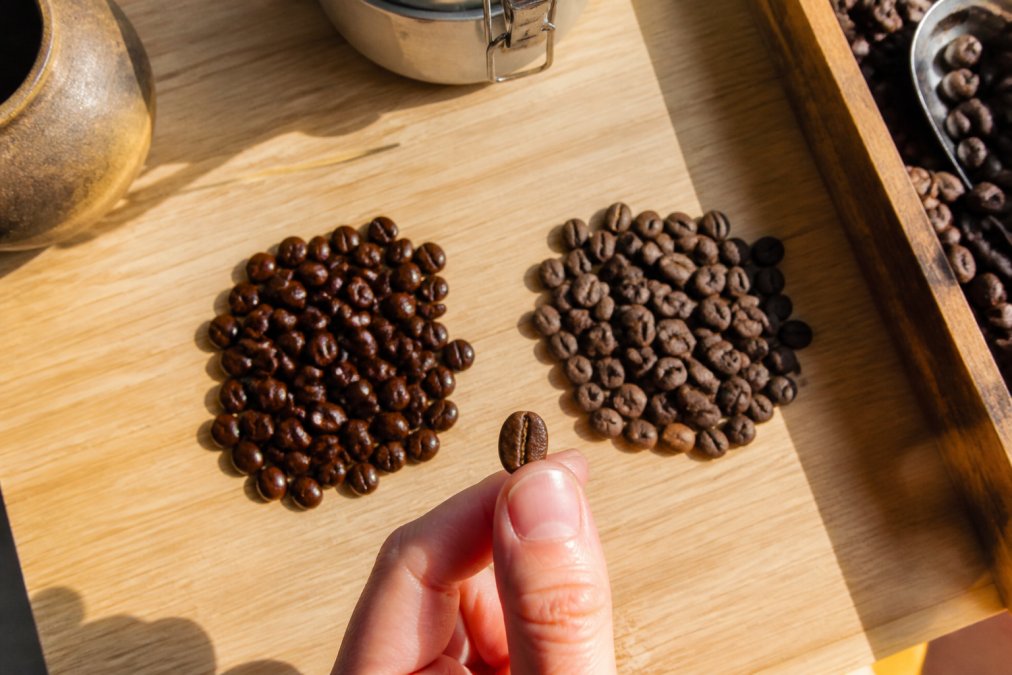
If your coffee tastes sour, hollow, or cardboard-like no matter how you adjust your brewing method, the beans are the problem, not your technique. No storage method can bring back aromatic compounds that oxidation has already destroyed, it can only slow the loss from here.
The Best Single Origin Coffee Beans Online
The best single origin coffee beans online are the ones roasted to order and shipped with a visible roast date, because you are buying time as much as you are buying flavor. Quire Brew roasts each order after you place it, so the beans arrive near peak freshness instead of after months in a warehouse.
Our single-origin lineup covers a range of flavor profiles:
| Coffee | Roast | Tasting Notes | Best For |
|---|---|---|---|
| Whiskey Barrel Aged | Medium | Bourbon barrel aged, roasted to order | Adventurous drinkers |
| Bali Blue | Med-dark | Dark chocolate, molasses, brown sugar | Full-bodied drip |
| Brazil Santos | Medium | Cocoa, smooth, elegant | Everyday brewing |
| Colombia | Medium | Dried orange, berry, chocolate | Balanced espresso |
| Ethiopia Natural | Med-light | Milk chocolate, fruity, caramel | Pour-over |
Each bag is $18.99 and roasted to order. If you are coming from a mass-produced grocery brand, expect a noticeably brighter acidity and a cleaner body from the first cup.


Cost Per Cup: Fresh Roasted vs Store Bought
Cost per cup narrows the gap more than most people expect. A bag of fresh roasted coffee at $18.99, brewed at roughly 16 grams per cup, works out to well under a dollar per serving, while a single cafe espresso often costs several dollars.
Store bought coffee can look cheaper per bag, but you are paying for volume that may already be stale. When you factor in how much of a stale bag gets poured out or drunk without enjoyment, the real cost per good cup tilts toward fresh roasted coffee. Many enthusiasts find that roasting-to-order beans deliver more consistent extraction and less waste.
National Coffee Association consumer trends
How to Tell If Your Coffee Beans Are Stale
You can tell coffee beans are stale by checking three things: appearance, aroma, and how they behave during brewing.
- Appearance: Fresh beans look glossy with visible oils. Stale beans look dull and dry.
- Aroma: Fresh beans smell sweet and complex. Stale beans smell flat, papery, or faintly rancid.
- Bloom: Fresh beans swell and bubble when hot water hits them. Stale beans barely react.
If your coffee tastes sour, hollow, or cardboard-like no matter how you adjust your brewing method, the beans are the problem, not your technique.
Conclusion
The gap between fresh roasted coffee and store bought coffee is measured in time, and time is the one variable you cannot fix after the fact. Choosing beans with a real roast date, storing them well, and grinding right before brewing does more for your cup than any equipment upgrade.
Quire Brew roasts single-origin beans to order and delivers them to your door, so your daily ritual starts with coffee at its peak. Explore our artisan blends, from Whiskey Barrel Aged to Ethiopia Natural, and subscribe to our emails to keep fresh coffee arriving on your schedule.
Frequently Asked Questions
Is fresh roasted coffee better than store bought?
Fresh roasted coffee typically tastes better because volatile oils and aromatic compounds haven't degraded yet. Beans roasted within 2-4 weeks retain more of their flavor profile, acidity, and body. Store bought coffee often sits for months before purchase, so oxidation flattens the notes you paid for. If you want the full sensory experience, buy roasted-to-order beans and drink them within a month of the roast date.
How long should you wait to drink coffee after it has been roasted?
Wait 3-7 days after the roast date for drip coffee and 7-14 days for espresso. During this window, the beans release carbon dioxide in a process called degassing. Brewing too soon causes uneven extraction and a flat, gassy cup. After degassing, the flavor peaks for about 2-3 weeks, then declines as oxidation sets in. Whole bean coffee holds up longer than pre-ground.
Does store-bought coffee lose its flavor profile faster?
Yes, usually. Grocery store coffee goes through a supply chain that can take weeks or months before it reaches the shelf, and the roast date is often missing. Once opened, exposure to oxygen, light, and moisture accelerates oxidation. Pre-ground coffee has even more surface area exposed, so the volatile oils evaporate faster. Vacuum-sealed bags help, but only until you break the seal.
How can you tell if your coffee beans are truly fresh?
Look for a printed roast date, not just a best-by date. Fresh whole beans feel slightly oily or matte depending on roast level, smell sweet and complex when you open the bag, and bloom vigorously when hot water hits them. Stale beans look dull, smell like cardboard or hay, and barely bubble during brewing. If the bag has no roast date, treat it as old.
What is the 15-15-15 rule for coffee?
The 15-15-15 rule is a brewing guideline: use a 15:1 water-to-coffee ratio, keep water between 195-205°F, and aim for a 15-minute window between grinding and brewing for peak flavor. Some baristas extend it to mean 15 days from roast to peak, 15 minutes from grind to brew, and 15 seconds of bloom. It's a practical reminder that freshness is time-sensitive at every stage.