

How to Maintain Coffee Freshness at Home
Table of Contents
- Why Coffee Freshness Fades So Fast
- What You'll Need Before You Start
- Step 1: Choose the Best Coffee Storage Containers
- Step 2: Control Heat, Light, and Moisture Exposure
- Step 3: Whole Bean vs. Pre-Ground, and How Grind Size Affects Shelf Life
- Step 4: Buy Smaller, Fresher Batches and Check the Roast Date
- How Long Do Coffee Beans Stay Fresh?
- Signs of Stale Coffee You Shouldn't Ignore
Last Updated: August 25, 2026
Why Coffee Freshness Fades So Fast
Coffee freshness is fragile. From the moment beans are roasted, deterioration begins, and home storage determines how much flavor survives to your cup. The culprit isn't one thing, it's four: oxygen, heat, light, and moisture. Each attacks your coffee differently, and understanding how they interact is the foundation of every storage decision you'll make.
The Science of Oxidation and Degassing
Oxidation occurs when oxygen molecules react with aromatic compounds in roasted coffee, breaking down the volatile oils that create complexity in the cup. Whole beans oxidize more slowly than pre-ground coffee because less surface area is exposed, but oxidation begins the moment roasting ends.
Degassing is the release of carbon dioxide for days or weeks after roasting. This outgassing initially protects the bean by pushing oxygen away from the surface, why specialty roasters use one-way valve bags that let carbon dioxide escape without letting oxygen in. Once degassing slows, oxygen exposure accelerates.
Most single-origin beans hit their flavor peak between three and fourteen days post-roast, depending on roast level. After that, the window narrows quickly.
What You'll Need Before You Start
Gather the right tools before adjusting storage:
- An airtight container with a one-way valve, or a sealed ceramic or glass canister with a tight lid
- A cool, dry pantry or cupboard away from the stove, oven, and windows
- A burr grinder (if buying whole beans, which you should be)
- A consistent batch size matching your weekly consumption
The most common mistake is assuming any container will do. A loosely sealed bag lets in enough oxygen to stale beans within days. Invest in a proper storage vessel once, and it pays off every morning.
Step 1: Choose the Best Coffee Storage Containers
The single most important decision is the container. The best coffee storage containers block oxygen completely and, ideally, let carbon dioxide out without letting air in.
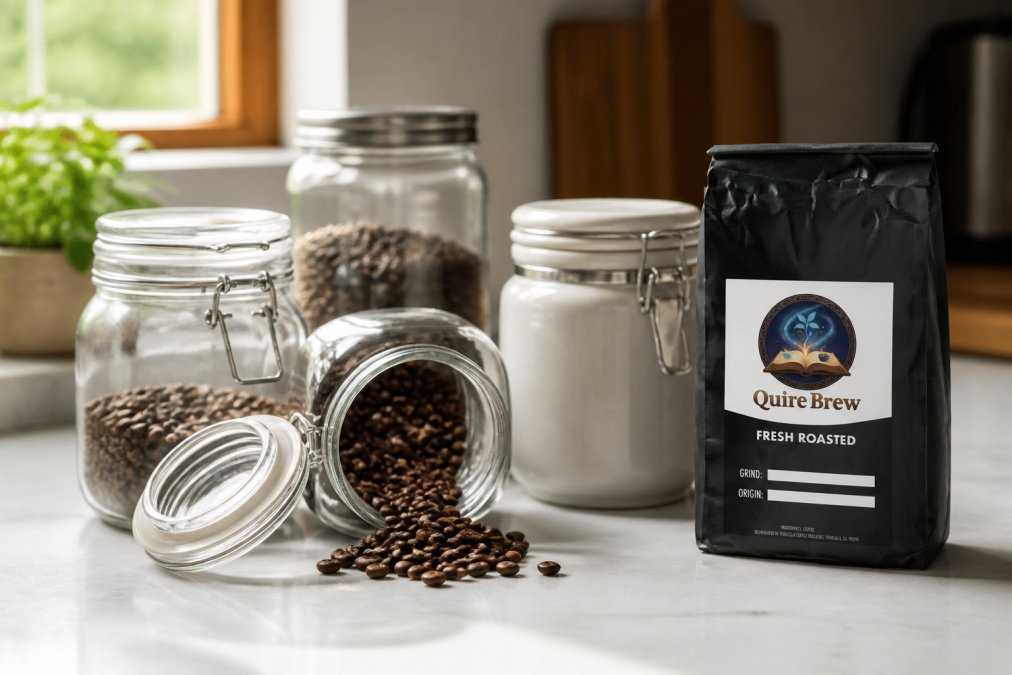
A quality airtight container maintains a low-oxygen environment that slows oxidation dramatically. Opaque containers add protection against light exposure. For most home brewers, a ceramic or stainless steel canister with a proper airtight seal hits the right balance of function and practicality.
Airtight Containers vs. One-Way Valve Bags
One-way valve bags allow carbon dioxide to escape while preventing oxygen from entering, making them ideal for freshly roasted coffee in the first one to two weeks post-roast. According to the Specialty Coffee Association's packaging and storage guidelines, proper valve bags are among the most effective solutions for preserving aroma and flavor profile during the degassing phase.
Once you open a valve bag, the seal is compromised. Transferring beans to a dedicated airtight container is the smarter move for daily use.
| Storage Option | Best For | Oxygen Control | Reusable |
|---|---|---|---|
| One-way valve bag | Freshly roasted beans (days 1-14) | Excellent | No |
| Airtight ceramic canister | Daily home storage | Very good | Yes |
| Vacuum-seal container | Longer storage periods | Excellent | Yes |
| Standard clip-top bag | Short-term (1-2 days only) | Poor | No |
| Glass jar with rubber seal | Budget option, dark cupboard | Good | Yes |
Eco-Friendly Storage Alternatives Worth Considering
Reusable stainless steel canisters with silicone seals are durable, non-reactive, and don't absorb odors. Some specialty ceramic containers are made from reclaimed materials and fully recyclable. Buying in bulk from a roaster who uses compostable valve bags and transferring to a permanent home canister reduces waste without compromising storage longevity.
The container material matters less than the seal quality. A well-made stainless canister with a worn-out gasket is worse for your coffee than a standard glass jar with a fresh, tight lid.
Step 2: Control Heat, Light, and Moisture Exposure
Heat accelerates oxidation and causes aromatic compounds to evaporate faster. A canister near a stove or on a countertop that gets afternoon sun loses flavor daily, even if sealed. The pantry or a high cupboard away from appliances is the right location.
Light exposure, particularly UV light, breaks down chlorogenic acids and other compounds in the bean. Dark or opaque containers matter, and a clear glass jar on a sunny windowsill is one of the worst storage choices.
Moisture accelerates oxidation and can trigger mold growth. Beans stored in high-humidity environments absorb ambient moisture over time, dulling their aroma and softening their structure.
Why the Refrigerator Is the Wrong Choice
The refrigerator is the wrong place to store coffee. First, refrigerators are humid, and every time you open the door, condensation forms on the container and beans. Second, coffee absorbs surrounding odors, storing beans next to leftovers results in coffee that tastes faintly of garlic.
As noted by the National Coffee Association's coffee storage guidance, ambient room temperature in a cool, dry location is the recommended storage environment for opened coffee.
Freezing Coffee Beans: When It Helps and When It Hurts
Freezing is legitimate only under specific conditions. Freeze only what you won't use for at least two weeks in a completely airtight, vacuum-sealed container. Divide beans into weekly-use amounts before freezing to minimize freeze-thaw cycles.
Never refreeze beans once thawed. Take out only what you need for the week, let it come to room temperature before opening the container, and brew within seven days.
Step 3: Whole Bean vs. Pre-Ground, and How Grind Size Affects Shelf Life
Whole beans stay fresh dramatically longer than pre-ground coffee due to surface area physics. Grinding increases the surface area exposed to oxygen enormously, meaning oxidation that takes weeks in whole bean form happens in days once ground.
If shelf life and flavor are priorities, grinding immediately before brewing is the single highest-impact habit you can adopt. A burr grinder produces consistent grind size, which matters for both extraction quality and how evenly coffee ages in storage.
Finer grinds have more surface area than coarse grinds, so espresso-ground coffee degrades faster than coarse cold brew grind. If pre-grinding for convenience, grind coarser and store in an airtight container for no more than three to five days.
According to research published in the journal npj Science of Food on coffee oxidation, volatile compound loss in ground coffee accelerates significantly within the first 24 hours after grinding.
Step 4: Buy Smaller, Fresher Batches and Check the Roast Date
The most overlooked freshness strategy has nothing to do with containers or temperature. Buying coffee in smaller batches more frequently is more effective than any storage upgrade.
A two-pound bag might seem economical, but if it takes a month to work through, the last two weeks will taste flat regardless of storage.
Always check the roast date before buying. A bag without a roast date usually means the coffee has been sitting in a warehouse long enough that the roaster doesn't want you to know when it was roasted.
How Altitude and Humidity Affect Your Storage Strategy
Home environments vary by season, geography, and use. These variables affect how quickly coffee degrades.
Homes at higher altitudes tend to have lower humidity, which benefits coffee storage. Drier air means less ambient moisture for beans to absorb. High-humidity environments, coastal regions, basements, or kitchens without strong ventilation require more attention. A vacuum-seal container is worth the investment, and keeping beans away from surfaces near the sink is essential. Some home brewers in humid climates add a food-safe silica desiccant packet to their storage canister.
Temperature fluctuations matter too. A kitchen that swings dramatically between morning and evening causes beans to expand and contract, accelerating off-gassing. Consistency is the goal: a cool, stable environment outperforms a colder but variable one.
How Long Do Coffee Beans Stay Fresh?
Whole beans stored in an airtight container in a cool, dry pantry typically hold their peak flavor for two to four weeks after the roast date. Pre-ground coffee stored under the same conditions degrades noticeably within three to five days.
| Coffee Form | Storage Method | Freshness Window |
|---|---|---|
| Whole bean | Airtight canister, pantry | 2-4 weeks post-roast |
| Whole bean | Vacuum-sealed, freezer | Up to 3 months |
| Pre-ground | Airtight canister, pantry | 3-5 days |
| Pre-ground | Vacuum-sealed | Up to 2 weeks |
| Instant coffee | Resealable pouch, sealed | Per manufacturer guidance |
Buying coffee in quantities you'll use within two to three weeks is the most reliable way to ensure consistent quality in the cup, as documented by the Specialty Coffee Association's consumer freshness resources.
Signs of Stale Coffee You Shouldn't Ignore
Stale coffee announces itself clearly. The most reliable indicator is aroma: fresh coffee has a strong, complex scent when you open the container. Stale coffee smells flat, faintly musty, or like nothing much at all.
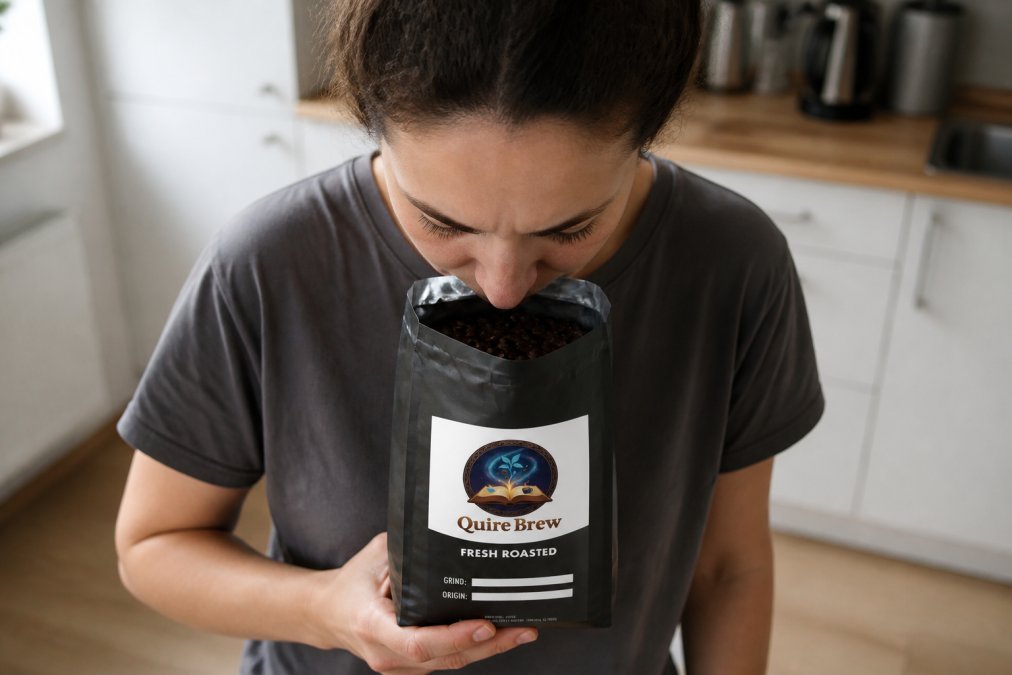
Watch for these signs:
- No bloom when brewing: Fresh coffee releases a visible bloom of carbon dioxide when hot water hits the grounds. If your pour-over shows no bubbling, the coffee has lost most of its carbon dioxide.
- Flat, one-dimensional flavor: Stale coffee tastes like less of itself, thin, papery, and without brightness or complexity.
- Oily surface on beans: A heavy, rancid-smelling oil coating on previously dry beans indicates oxidized lipids.
- Dusty or chalky appearance: Beans that look dull have lost significant moisture and aromatic compounds. They'll grind unevenly and brew poorly.
Once you experience genuinely fresh beans roasted within the past two weeks, stored properly, and ground just before brewing, the difference is impossible to ignore.
Maintaining coffee freshness at home is a skill that compounds quietly, every small improvement adds up to a noticeably better cup every morning. Quire Brew's curated single-origin blends and artisan roasts are sourced to arrive at their peak, with roast dates clearly marked. Explore the collection and subscribe to our emails for brewing guides, seasonal releases, and storage tips delivered straight to your inbox.
===
Frequently Asked Questions
What's the best way to keep your coffee fresh at home?
Store whole coffee beans in an airtight container with a one-way valve, kept in a cool, dark cupboard away from heat sources, direct sunlight, and moisture. Grind only what you need right before brewing. Buy in smaller batches and check the roast date, beans are at their best within two to four weeks of roasting. Avoid the refrigerator entirely, and only freeze beans if you're storing a large quantity for more than a month.
How long do coffee beans stay fresh after opening?
Whole beans stored in an airtight container in a cool, dry pantry typically stay fresh for two to four weeks after opening. Pre-ground coffee loses its flavor profile much faster, often within three to five days, because the increased surface area accelerates oxygen exposure and oxidation. For the longest shelf life, buy freshly roasted beans, note the roast date, and grind them only as needed. Vacuum-sealed bags can extend this window slightly before opening.
Does freezing coffee beans actually keep them fresh?
Freezing works, but only when done correctly. Divide beans into single-use portions before freezing so you never refreeze thawed coffee. Use airtight, vacuum-sealed bags to prevent freezer burn and condensation from damaging the beans. When you're ready to brew, let the portion thaw fully at room temperature before opening the bag. Repeated temperature fluctuations are the main cause of quality loss, so the key is freezing once and using the portion completely.
Will coffee stay fresh in a Ziploc bag?
A standard Ziploc bag is not ideal for maintaining coffee freshness. It doesn't create a true airtight seal, allows oxygen exposure over time, and offers no protection against light or temperature fluctuations. For short-term storage of a day or two it's acceptable in a pinch, but for anything longer, an airtight container or a resealable pouch with a one-way valve, like the kind used for freshly roasted beans, will preserve aroma and flavor far better.
This article was written using GrandRanker