

Blue Bottle Coffee Alternatives for Enthusiasts
Table of Contents
- What Sets Coffee Alternatives Apart From Blue Bottle
- Single Origin vs Blended Coffee Beans: Which Suits Your Palate
- Flavor Profile Mapping: Finding Your Preferred Roast and Tasting Notes
- Best Specialty Coffee Subscriptions: Models That Respect Your Flexibility
- Sustainability and Transparency: Ethical Sourcing Standards That Matter
- Price-to-Quality Ratio: What You Actually Get for Your Money
- Brewing Method Compatibility: Matching Beans to Your Equipment
- Frequently Asked Questions
Last Updated: September 2, 2026
What Sets Coffee Alternatives Apart From Blue Bottle
Blue Bottle built its reputation on accessibility and consistency, but today's discerning coffee enthusiasts seek deeper transparency, flavor precision, and subscription flexibility. The real difference isn't bean quality, it's philosophy. Blue Bottle optimized for convenience and brand recognition. The alternatives covered here optimize for direct relationships with growers, flavor precision, and subscriptions that treat you like a person, not a recurring revenue stream.
Serious coffee enthusiasts want to know exactly where their beans come from, taste the difference between processing methods, and pause subscriptions without guilt or hidden fees. The coffee alternatives that matter most share three characteristics: they source directly or through direct trade relationships, they publish detailed tasting notes tied to specific processing methods, and they respect your autonomy as a subscriber.
Single Origin vs Blended Coffee Beans: Which Suits Your Palate
The choice between single-origin and blended coffee beans determines everything about your cup. Single-origin beans express the specific terroir, altitude, and processing method of one region. Blended beans combine multiple origins to achieve consistency, complexity, or a specific flavor target.
Single-Origin Clarity and Terroir Expression
Single-origin coffee is uncompromising. You taste exactly what that region, harvest, and processing method produce. A specialty coffee association guide on terroir explains that altitude, soil composition, and climate create measurable differences in bean chemistry.
Consider Quire Brew's Ethiopia Natural at $18.99. This med-light roast from the Sidama zone, processed naturally and dried on raised beds, delivers milk chocolate, fruity, and caramel notes. The indigenous heirloom cultivars grown at 1700-1900 meters in Nitisol soil create those specific flavor compounds. You're tasting geography.

The advantage is clarity. When you brew a single-origin, you know exactly what you're evaluating. If you taste bright acidity and citrus, you can trace that back to the washed process and high altitude. The disadvantage is inconsistency, single-origin beans vary by harvest. But if you view that variation as a window into how weather and farming decisions affect flavor, single-origin is non-negotiable.
For home baristas, single-origin works best if you have a specific brewing method you've dialed in. Single-origin beans reward precision.
Blended Complexity and Consistency
Blended coffee beans solve for what single-origin cannot: predictability and layered flavor. Quire Brew's African Espresso blends Kenya, Tanzania, and Ethiopia into a medium-dark roast, delivering brightness, body, and sweetness in one cup.
Blends are also forgiving. If your water temperature drifts or your grind isn't perfect, a blend absorbs the mistake better than a single-origin. The trade-off is specificity, you lose the ability to taste pure terroir. You're tasting a roaster's vision, not a region's expression.
For espresso machines, blends often make more sense. Espresso extraction is aggressive and unforgiving. A blend's layered flavors hold up to that pressure better than a delicate single-origin.
| Aspect | Single-Origin | Blended |
|---|---|---|
| Flavor Expression | Pure terroir, region-specific | Intentional complexity, roaster's vision |
| Consistency | Varies by harvest | Engineered for predictability |
| Best Brewing Method | Pour-over, AeroPress, Chemex | Espresso, French press |
| Learning Curve | Steep (requires precision) | Moderate (forgiving) |
| Cost Per Bag | $18-22 typically | $18-22 typically |
Flavor Profile Mapping: Finding Your Preferred Roast and Tasting Notes
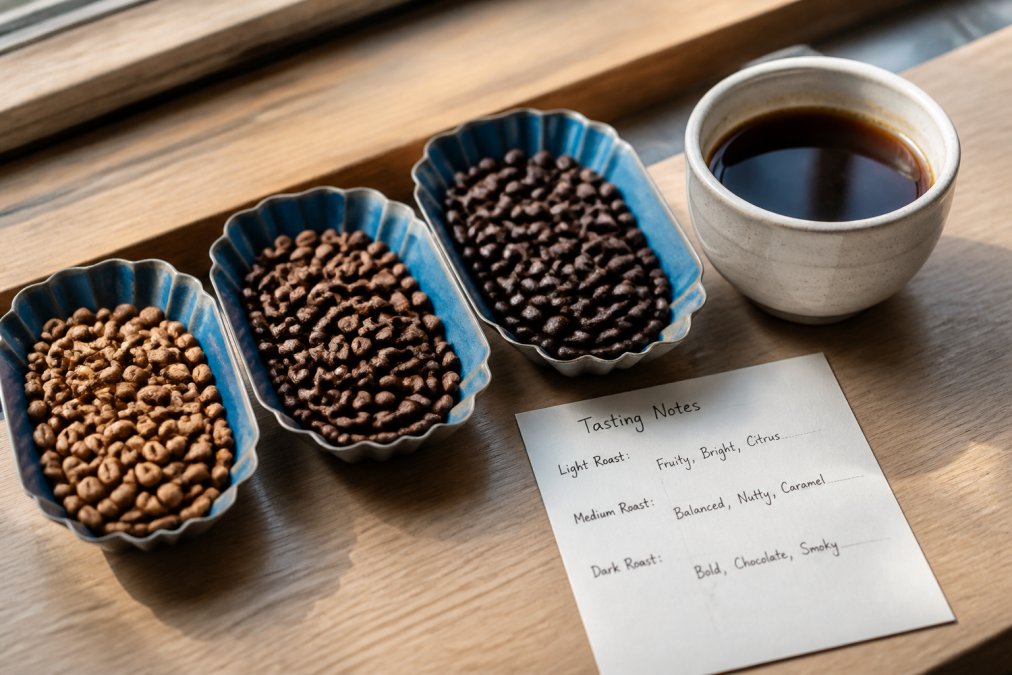
Understanding flavor profiles is the difference between buying coffee and choosing coffee. Light roasts preserve the bean's origin flavors and highlight acidity. Medium roasts balance origin character with roast-induced sweetness. Dark roasts emphasize body and reduce acidity, pushing toward chocolate and caramel.
Processing method matters equally. A washed process creates cleaner, brighter flavors with more acidity (peer-reviewed research). A natural process creates more body, fruit-forward notes, and lower acidity. A honey process splits the difference.
Quire Brew's Colombia is a medium roast, fully washed, from Medellin, delivering dried orange, berry, and chocolate notes. The washed process brings clarity. The medium roast adds chocolate. The altitude and volcanic loam soil create the berry and citrus brightness.

Compare that to Quire Brew's Bali Blue, a med-dark roast from Kintamani, processed via wet-hulling. The tasting profile: dark chocolate, molasses, brown sugar. The wet-hulling creates syrupy body and molasses sweetness. The med-dark roast deepens the chocolate.
The practical skill is learning your own palate. Do you prefer bright acidity or soft body? Do you like fruit-forward or chocolate-forward? Once you know your answers, you can navigate tasting notes with confidence. Tasting notes are more useful than cupping scores if you're trying to find what you actually like.
Best Specialty Coffee Subscriptions: Models That Respect Your Flexibility
Coffee subscriptions have earned a reputation for being traps. The best specialty coffee subscriptions for enthusiasts solve this by building flexibility into the core model.
Pause and Skip Options Without Penalty
The gold standard is a subscription that lets you pause or skip any month without losing your membership, without a restart fee, and without pressure to resume. Coffee enthusiasts travel, take vacations, build up stockpiles, and experiment with local roasters. A subscription that punishes any of these behaviors isn't built for real life.
When you evaluate a coffee subscription, ask directly: Can I pause without losing membership status? Can I skip a month without paying? Are there any restart fees? If the answers aren't clear on the website, that's a red flag. Transparent subscriptions advertise these policies prominently.
Some roasters offer "pause indefinitely" options, where you keep your membership but don't receive shipments until you manually resume. Others let you skip up to three months per year without questions. These roasters understand their customers aren't captive audiences.
Curated Selection vs. Customizable Frequency
Curated selections work if you trust the roaster's judgment. You get surprise and discovery. Quire Brew's Single Origin Favorites Sample Pack at $24.99 exemplifies this approach, offering six 2-ounce samples of rotating single-origins.
Customizable frequency works if you know what you like and want consistency. You pick the same coffee every month or rotate through your favorites on a schedule you control. The best subscriptions offer hybrid models: a curated core with customizable add-ons.
| Subscription Model | Best For | Trade-Off |
|---|---|---|
| Fully Curated | Discovery-focused enthusiasts | No control over selections |
| Fully Customizable | Consistency-focused drinkers | Requires active management |
| Hybrid (Curated + Override) | Most enthusiasts | Slightly higher complexity |
| Sample Packs | Explorers trying multiple origins | Higher cost per ounce |
Sustainability and Transparency: Ethical Sourcing Standards That Matter
Coffee enthusiasts increasingly care about where their beans come from and who benefits. "Ethical sourcing" is vague. Fair trade certification guarantees a minimum price to farmers and funds community development projects (fairtrade.net). It's verifiable and third-party audited, though it doesn't guarantee exceptional quality.
Direct trade is less formal but often more impactful. A roaster buys directly from a specific farmer or cooperative, cutting out middlemen and paying above commodity prices. Direct trade coffees often taste better because the roaster has a relationship with the farmer and can request specific processing methods.
Single-origin coffees from named cooperatives or specific farms sit between these poles. Quire Brew's Kenya comes from Othaya in Nyeri County, grown by named farmers using specific varieties. That specificity matters.

When evaluating coffee alternatives for enthusiasts, look for roasters who publish specific farm or cooperative names, altitude and processing method, farmer payment information or fair trade certification, and environmental practices. Transparency is accountability.
Price-to-Quality Ratio: What You Actually Get for Your Money
Coffee pricing is confusing because quality doesn't scale linearly with price. Entry-level specialty coffee (around $12-15 per bag) is genuinely good and better than anything in a grocery store. Mid-tier specialty coffee ($16-22 per bag) is where most enthusiasts live. Quire Brew's pricing tier at $18.99 per bag offers fresh roasts, traceable origins, and intentional blending. Premium specialty coffee ($25-35+ per bag) targets micro-lots and exceptional harvests.
The practical calculation: If you drink a bag per week, you're spending roughly $75-100 monthly on mid-tier specialty coffee. At those volumes, the quality jump from grocery-store coffee to specialty coffee is enormous. For coffee alternatives for enthusiasts, mid-tier pricing ($18-22 per bag) offers the best value.
Brewing Method Compatibility: Matching Beans to Your Equipment
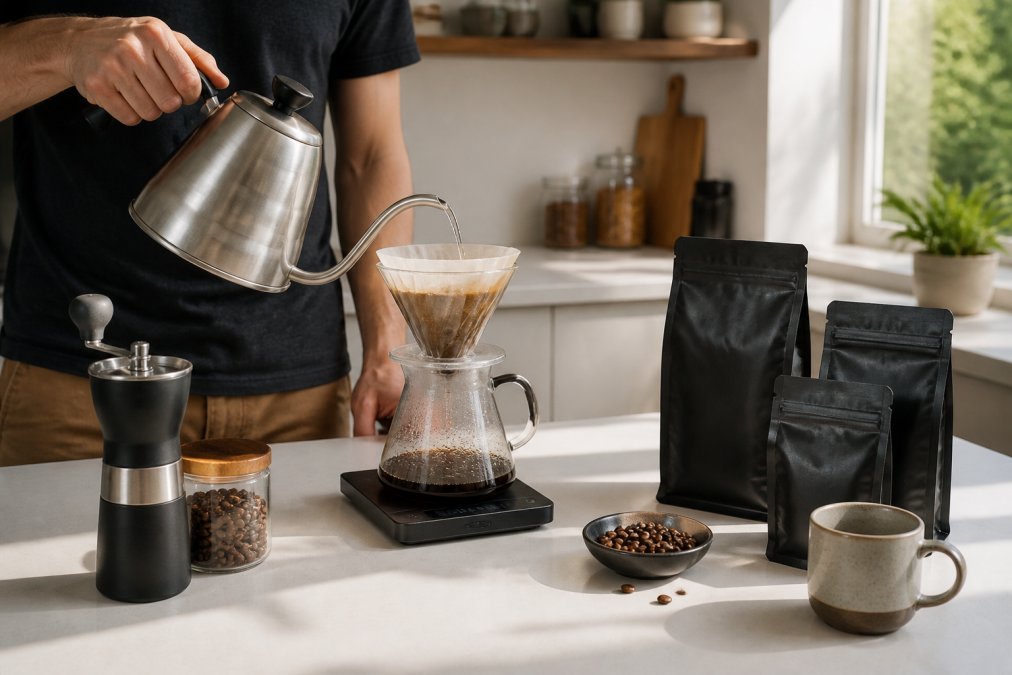
Your brewing method determines which coffees will shine. Pour-over brewing (Chemex, V60, Kalita Wave) is precise and highlights origin. Single-origin coffees excel here. Lighter roasts work best.
French press brewing emphasizes body and sweetness. Medium and dark roasts work better than light roasts. Blended coffees often outperform single-origins because the multiple flavor layers hold up to full immersion.
Espresso machines are aggressive. High pressure forces water through finely ground coffee in 25-30 seconds. Blended coffees are traditional here, but single-origins work too if roasted slightly darker. Medium and medium-dark roasts are standard.
Moka pots occupy a middle ground. Medium roasts work well. Blends are safer than single-origins because the pressure and temperature are less controllable.
AeroPress is forgiving and versatile. Single-origins shine here because you can adjust your technique. Light to medium roasts work best.
Cold brew is its own category. Coarse grounds steep in cold water for 12-24 hours. Any roast level works, but medium and medium-dark roasts are traditional.
When you choose a coffee subscription, consider your equipment first. If you have a pour-over, you want single-origins and light roasts. If you have an espresso machine, you want blends and medium-dark roasts.
Choosing a coffee subscription means deciding what matters most to you: discovery or consistency, transparency or convenience, price or rarity. The best specialty coffee subscriptions for enthusiasts respect your autonomy. They let you pause without guilt. They publish detailed sourcing information. They match their pricing to their quality.
Quire Brew delivers exactly this. Our curated single-origin selection, from Ethiopia Natural to Kenya to Sumatra, gives you direct access to coffees roasted to order with complete transparency on origin, altitude, processing, and flavor. Our subscription respects your flexibility. Our pricing ($18.99 per bag) matches the quality. Subscribe to our emails and start your day with clarity.
Frequently Asked Questions
Q: What makes a good Blue Bottle Coffee alternative for specialty enthusiasts?
A: Look for roasters offering single-origin beans with detailed tasting notes, transparency about sourcing and roast dates, and flexible subscription models that let you pause without penalties. The best alternatives prioritize freshly roasted whole beans. Quire Brew's single-origin offerings like Ethiopia Natural and Kenya deliver the flavor complexity and terroir expression discerning home baristas expect, with the flexibility to order one-time or build a custom rotation.
Q: How do single-origin vs blended coffee beans differ in flavor and value?
A: Single-origin beans showcase the unique characteristics of a specific region, altitude, and processing method, offering distinct tasting notes like fruity acidity or chocolate body. Blended coffees combine beans from multiple origins to create consistent flavor profiles and balance. Single-origins can offer complexity and storytelling; blends offer value and reliability. For enthusiasts, single-origins excel for exploration, while blends work well for daily brewing. Quire Brew's single-origin range (Colombia, Guatemala, Kenya) pairs perfectly with blends like African Espresso for variety.
Q: Can I actually pause a coffee subscription without getting charged or hassled?
A: Yes, but terms vary by roaster. Many specialty subscriptions now offer skip or pause options built into their accounts, no phone calls or penalties required. Before committing, check the roaster's website for explicit pause/skip policies and cancellation terms. Quire Brew's automated fulfillment system respects customer control, allowing you to manage your delivery schedule without surprise charges. Always verify the process upfront to avoid frustration during busy months or travel.
Q: What sustainability certifications should I look for in specialty coffee?
A: Look for direct-trade relationships (roaster buys directly from farmers at premium prices), Fair Trade certification, or Rainforest Alliance standards. Transparency about processing methods, washed, natural, or honey process, matters too, as it reflects water usage and environmental impact. Quire Brew sources from smallholder farmers using sustainable methods like hand-picking and raised-bed drying, prioritizing quality and ethical practices alongside flavor.