

Ethical Coffee Subscriptions for Mindful Consumers
Table of Contents
- What Makes an Ethical Coffee Subscription Worth Your Money
- Single Origin vs Blended Coffee Beans: Which Supports Ethical Sourcing
- Fair Trade Coffee Certification Standards Explained
- How to Identify Truly Ethical Coffee Brands
- Quire Brew: Artisan Single-Origin Selections with Transparent Sourcing
- The Real Cost of Ethical Coffee Subscriptions
- Beyond Fair Wages: Environmental Impact and Regenerative Farming
Last Updated: August 29, 2026
What Makes an Ethical Coffee Subscription Worth Your Money
An ethical coffee subscription represents more than just convenient delivery. It's a commitment to transparency in sourcing, fair compensation for farmers, and environmental stewardship that transforms your daily ritual into conscious consumption. At Quire Brew, we've built our operation around this principle, curating artisan single-origin selections that trace directly back to the farmers and cooperatives producing them.
The real question isn't whether ethical sourcing matters, it's whether you're willing to pay a premium for verifiable proof that your money reaches the people growing your coffee. Most subscriptions claim transparency but offer little beyond a vague "fair trade certified" label. True ethical sourcing requires direct relationships, documented wages, and traceable supply chains that few services genuinely maintain.
When you subscribe to an ethical coffee service, you're evaluating several interconnected factors: the sourcing model (direct trade versus fair trade certification), the roastery's environmental commitment, supply chain documentation clarity, and whether pricing genuinely supports farmer livelihoods. This guide separates marketing from substance and identifies subscriptions that deliver on ethical promises.
Single Origin vs Blended Coffee Beans: Which Supports Ethical Sourcing
Single-origin coffees offer distinct advantages for ethical sourcing because they create direct accountability. When you buy a single-origin bean from a specific region, farm, or cooperative, the supply chain is shorter and easier to verify. You know exactly where your coffee came from, which farmer or cooperative grew it, and at what altitude and using what processing methods.
Blended coffees combine beans from multiple origins and farms. While blends can be ethical, the complexity of the supply chain makes verification harder. You're trusting the roaster's sourcing practices across several relationships rather than one.
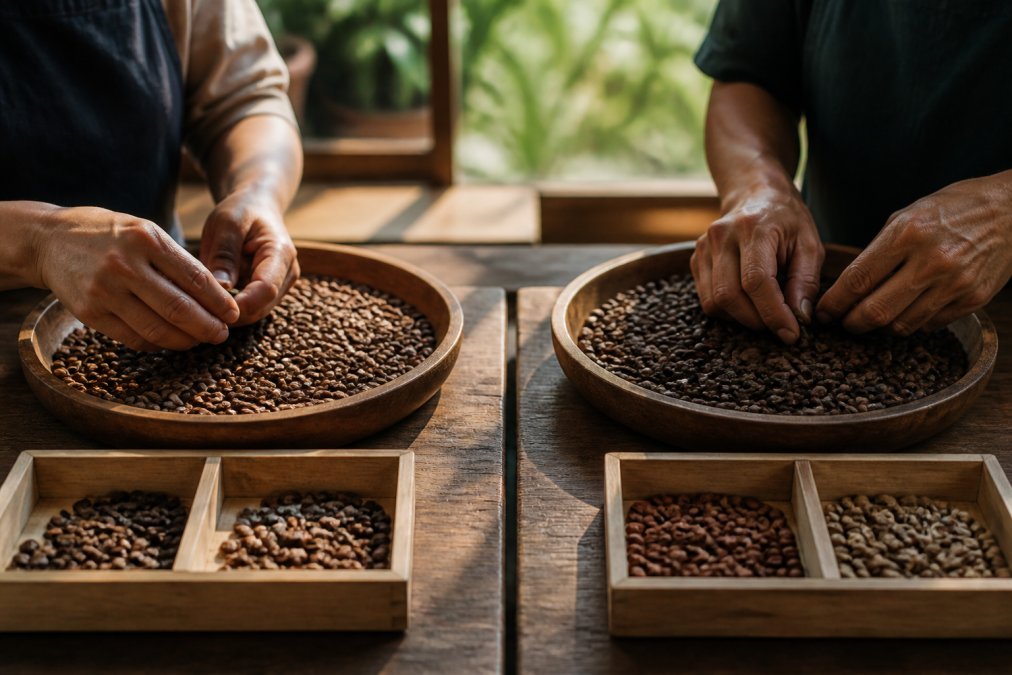
From an ethical perspective, single-origin coffees typically offer clearer accountability. When Quire Brew sources single-origin beans like our Ethiopia Natural from smallholder farmers in the Sidama zone or our Guatemala from cooperatives in Antigua, the sourcing story is transparent and verifiable. You can see the altitude, soil type, processing method, and specific grower relationship.

Blends can also serve ethical purposes when roasters deliberately combine beans from multiple farmer cooperatives, ensuring each purchase supports several farming communities. The key distinction is whether the roaster documents where each component comes from and has directly negotiated pricing with growers involved.
Single-origin coffees are easier to verify and audit, but blends can support more farmers per purchase if the roaster maintains transparent relationships with multiple sources. Neither is inherently more ethical; transparency and direct trade relationships matter more than whether the final product is single-origin or blended.
Fair Trade Coffee Certification Standards Explained
Fair trade certification standardizes and verifies ethical practices across the coffee industry. Recognized certification bodies set minimum price floors for coffee beans, require transparent supply chain documentation, and mandate that a portion of revenue goes directly to farmer cooperatives or community development projects.
Fair trade certification provides third-party verification that coffee meets specific ethical standards. Certifying organizations audit farms, verify payment records, and confirm farmers receive at least the minimum fair trade price. This creates accountability beyond marketing claims.
However, fair trade certification has limitations. The minimum fair trade price, roughly $1.40 per pound for conventional coffee, often falls short of what direct trade relationships offer (fairtrade.net). Some small-scale roasters argue that direct relationships yield better prices and more sustainable partnerships than commodity-based certification systems. Additionally, certification fees sometimes exclude smaller farming operations.
Direct trade bypasses third-party certification entirely. Roasters establish direct relationships with specific farms or cooperatives and negotiate prices based on quality, sustainability practices, and relationship sustainability rather than commodity benchmarks. Direct trade pricing often exceeds fair trade minimums because the roaster and farmer share economics directly, without certification intermediaries.
Both models have merit. Fair trade certification provides verifiable standards and protects farmers through documented minimums. Direct trade relationships often yield better outcomes for individual farmers but require rigorous sourcing practices and transparent documentation. Many ethical roasters use both: they maintain direct relationships with some suppliers while sourcing fair trade certified beans from other origins.
When evaluating an ethical coffee subscription, look for clarity on which model they use and why. Roasters combining direct trade relationships with fair trade certified beans demonstrate nuanced understanding of supply chain ethics.
How to Identify Truly Ethical Coffee Brands
Identifying genuinely ethical coffee brands requires moving beyond marketing language and examining specific documentation. Start by asking for supply chain transparency: Can the roaster name the farm or cooperative that grew your coffee? Can they provide the farmer's approximate income from your purchase? Do they publish third-party audit reports or certification documentation?
Authentic ethical brands provide detailed sourcing information on product pages. They name specific farms or cooperatives, list altitude and processing method, and explain sourcing and pricing practices. Quire Brew does this across our entire single-origin lineup; each product page includes the grower's name or cooperative, region, altitude, soil type, and processing method.
Look for roasters who discuss farmer compensation explicitly. How much of the retail price reaches the farmer? What premium do they pay above commodity pricing? Transparent roasters state this directly. Some use direct trade pricing models guaranteeing farmers significantly above-market rates. Others participate in fair trade certification systems with published minimum prices.
Verify environmental claims through concrete practices, not vague language. True environmental stewardship shows up in specific commitments: compostable or recyclable packaging, carbon-neutral shipping options, support for regenerative farming practices, or documented investments in biodiversity conservation on partner farms.
Check whether the brand has third-party certifications or audits. Fair trade certification, organic certification, or environmental audits from recognized bodies provide independent verification. However, the absence of formal certification doesn't indicate unethical practices; some small roasters maintain rigorous standards without pursuing expensive certifications. What matters is whether they can document their practices through other means.
Finally, assess consistency between marketing claims and actual operations. Do they talk about farmer empowerment but source from commodity brokers? Do they emphasize sustainability while using non-recyclable packaging? Inconsistency between messaging and verifiable practice is the clearest sign of greenwashing.
Quire Brew: Artisan Single-Origin Selections with Transparent Sourcing
Quire Brew represents a direct-trade approach to ethical coffee sourcing, with each single-origin selection traceable to specific farming communities and documented sourcing practices. Our Ethiopia Natural comes from smallholder farmers in the Sidama zone, where we've established direct relationships with growers producing indigenous heirloom cultivars at altitudes between 1,700 and 1,900 meters. The natural process creates distinctive milk chocolate, fruity, and caramel notes.
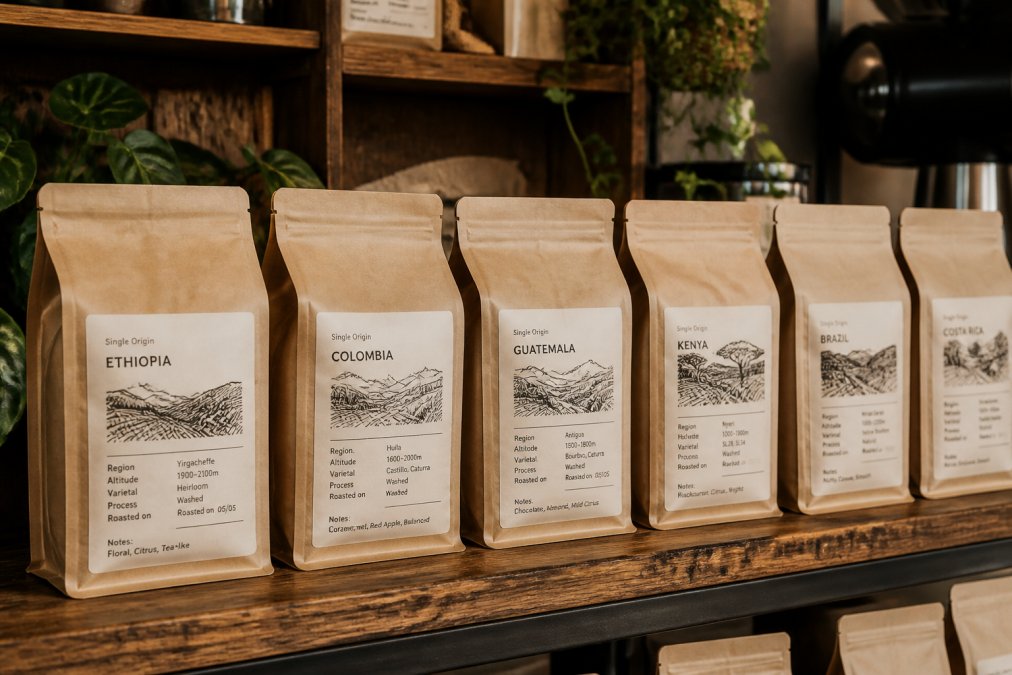
Our Guatemala offering sources from smallholder farmers in Antigua, a region known for volcanic loam soils producing bright, complex flavors. The medium roast highlights dark chocolate, bright fruit, and butterscotch notes. Each bag includes specific altitude range (1,200-1,616 meters) and processing method (fully washed and sun dried).

What distinguishes Quire Brew is our commitment to transparent sourcing at every level. Our Honduras selection supports 1,500 grower members from Cafe Organics Marcala, a farmer cooperative distributing revenue directly to participating farmers (fairtrade.net). Our Mexico offering sources from coffee growers in Chiapas and Oaxaca. The Nicaragua selection features smallholder farmers from Molino Norte with documented sourcing relationships and verified farmer compensation.
Quire Brew also offers specialty blends combining ethical sourcing with functional ingredients. Our Coffee with Mushrooms Dark Roast and Medium Roast blend specialty-grade coffee with Lion's Mane, Cordyceps, and Reishi mushrooms, priced at $20.99. Single-origin coffees are priced at $18.99, reflecting the premium positioning of ethical, artisan sourcing.
The Real Cost of Ethical Coffee Subscriptions
Ethical coffee subscriptions cost more than commodity coffee because direct farmer relationships, smaller batch sizes, rigorous quality control, transparent supply chain documentation, and premium packaging all add legitimate costs. A typical ethical coffee subscription ranges significantly higher than supermarket brands.
When you pay $18.99 to $20.99 per bag for Quire Brew's single-origin or specialty blend coffees, you're paying for direct farmer relationships at rates significantly above commodity pricing, quality control processes, supply chain documentation, sustainable packaging, and customer service. The remaining margin supports business operations that make the ethical model possible.
Commodity coffee might cost $8-12 per bag at retail. The price difference reflects fundamentally different supply chains. Commodity coffee is sourced through brokers aggregating beans from multiple origins, prioritizing cost efficiency over transparency. Ethical sourcing requires direct relationships, smaller batch sizes, and rigorous documentation that commodity systems deliberately avoid.
The question isn't whether ethical coffee costs more; it does. The question is whether the premium delivers measurable ethical impact. When you purchase Quire Brew's Ethiopia Natural at $18.99, can you verify that smallholder farmers in Sidama received a significant premium above commodity pricing? Can you confirm the cooperative distributes revenue fairly? If yes, the premium reflects real ethical value rather than marketing.
Some ethical subscriptions blur the line between premium pricing and greenwashing by charging ethical prices while maintaining commodity supply chains or providing minimal farmer compensation documentation. You can identify these by asking specific questions about documented farmer prices and third-party verification.
Beyond Fair Wages: Environmental Impact and Regenerative Farming
Ethical coffee sourcing extends beyond farmer compensation into environmental stewardship. The coffee industry significantly impacts biodiversity, soil health, water systems, and carbon emissions. Truly ethical subscriptions address these environmental dimensions.
Regenerative farming practices represent the frontier of ethical coffee production. Rather than sustaining current conditions, regenerative approaches actively improve environmental health through shade-grown coffee (where coffee plants grow beneath native tree canopies, preserving biodiversity), composting programs building soil carbon, water conservation systems, and integrated pest management reducing chemical inputs.
Shade-grown coffee supports significantly more bird species, insects, and broader ecosystem health than full-sun monocultures (peer-reviewed research). Shade-grown coffee typically produces lower yields per hectare, which explains part of the premium pricing for ethically sourced coffee.
Biodiversity conservation on coffee farms matters because coffee-growing regions often overlap with biodiverse ecosystems. Central American highlands, Ethiopian highlands, and other major coffee regions support unique species found nowhere else. Coffee farming preserving native vegetation and avoiding chemical inputs protects these ecosystems while supporting farmer livelihoods.
Carbon footprint considerations extend beyond the farm to packaging and shipping. Ethical coffee subscriptions increasingly offer carbon-neutral shipping options or use compostable, recyclable packaging. Some roasters have implemented carbon offset programs or committed to specific emissions reduction targets.
Quire Brew's environmental stewardship shows in our sourcing partnerships with farms practicing sustainable agriculture and our focus on transparent documentation of farming methods. Our sourcing relationships emphasize long-term sustainability over short-term yield maximization.
The connection between environmental impact and farmer prosperity is direct: farmers investing in regenerative practices, biodiversity conservation, and soil health create more resilient operations weathering climate variability better than high-input, low-diversity farms.
| Ethical Sourcing Model | Farmer Compensation | Supply Chain Transparency | Environmental Focus | Verification Method |
|---|---|---|---|---|
| Direct Trade | Above-market negotiated prices | Direct farm relationships documented | Regenerative and shade-grown options | Roaster documentation and farmer interviews |
| Fair Trade Certified | Minimum price floor plus premiums | Third-party audited supply chain | Environmental standards required | Independent certification body audits |
| Commodity + Greenwashing | Commodity prices | Opaque broker relationships | Marketing claims without practice | None, claims unverified |
| Hybrid (Direct + Fair Trade) | Direct premiums plus certified minimums | Documented relationships and audits | Verified environmental practices | Combination of roaster and certification documentation |
Choosing an ethical coffee subscription requires evaluating alignment between pricing, sourcing transparency, farmer compensation, and environmental impact. Subscriptions delivering genuine value combine clear documentation of coffee origins with verifiable evidence that farmers receive meaningful premiums and environmental practices support long-term sustainability.
Quire Brew's approach emphasizes this alignment through transparent sourcing of single-origin selections from documented farming communities, specialty blends combining ethical sourcing with functional ingredients, and direct relationships with farmer cooperatives distributing revenue fairly. By prioritizing traceability and verifiable supply chain practices, we ensure your investment translates into measurable impact for farming communities and environmental stewardship.
Subscribe to Quire Brew's curated selections and receive artisan single-origin coffees with complete sourcing transparency delivered directly to your door. Each shipment includes documented grower information, altitude data, and processing methods so you know exactly where your coffee originates and how it supports ethical farming practices.
Frequently Asked Questions
What criteria should I look for in an ethical coffee subscription?
Look for transparent supply chain traceability showing exactly where your beans come from. Verify direct trade or fair trade certification standards are in place. Check if the roaster works with farmer cooperatives and shares information about grower wages. Assess their commitment to sustainable agriculture, regenerative farming practices, and eco-friendly packaging. Read third-party auditing reports when available. Quire Brew's single-origin offerings include detailed grower information and sourcing specifics for each origin.
What is the difference between Fair Trade and Direct Trade coffee?
Fair Trade certification involves third-party verification ensuring minimum prices and labor standards are met, but the supply chain is less direct. Direct trade means the roaster buys directly from farmers or farmer cooperatives, typically at higher prices, allowing more transparency and stronger relationships. Direct trade often results in better prices for farmers since there are fewer intermediaries. Both models support living wages, but direct trade offers greater supply chain traceability and typically stronger community impact metrics beyond wages.
Is a coffee subscription worth it for someone focused on ethical sourcing?
Yes, if you prioritize supply chain transparency and supporting farmers directly. Ethical subscriptions provide consistent access to single-origin beans with verified sourcing, often at better prices than buying individually. You support farmer cooperatives and regenerative agriculture practices through regular purchases. The convenience of roastery-to-door delivery reduces your carbon footprint compared to multiple retail trips. However, verify the subscription allows pausing without penalties if your needs change, ensuring flexibility without unexpected charges.
How can I verify that a coffee brand isn't greenwashing its ethical claims?
Request specific sourcing documentation: grower names, cooperative details, altitude, and processing methods. Check for third-party certifications beyond the brand's own marketing. Visit the roaster's website for transparent supply chain information and farmer stories. Ask whether they conduct site visits to farms. Legitimate ethical brands publish detailed information about their sourcing practices and farmer relationships. Quire Brew provides specific grower information, regional details, and altitude data for each single-origin option, allowing you to verify the sourcing story behind your coffee.