

High Quality Coffee Beans for Gifts: 2026 Guide
Table of Contents
- What Makes Coffee Beans High Quality Enough to Gift
- Quick Comparison: Coffee Beans for Gifts at a Glance
- Best Single Origin Coffee Beans for a Memorable Gift
- Sample Packs and Gift Sets That Let Them Taste Before Committing
- Flavored and Barrel-Aged Beans for Adventurous Coffee Lovers
- How to Store Coffee Beans for Freshness After the Gift Is Opened
- Pairing Coffee Gifts With Non-Coffee Items for a Complete Present
- Frequently Asked Questions
Last Updated: September 14, 2026
What Makes Coffee Beans High Quality Enough to Gift
High quality coffee beans for gifts share four markers: a printed roast date, a named origin or farm, whole-bean form, and a roast level matched to how the recipient actually brews. Flavor descriptors on the bag matter less than those four facts.
This guide from Quire Brew covers the beans worth wrapping, how to store coffee beans for freshness, and which extras turn a bag into a real present.
Freshly roasted beans peak roughly one to three weeks after the roast date, then fade gradually (Changes in sensory quality characteristics of coffee during storage). A "best by" date a year out tells you nothing about when it was roasted, so specialty buyers treat the roast date as the single most reliable quality signal.
Quick Comparison: Coffee Beans for Gifts at a Glance
The table below maps Quire Brew's gift-ready lineup by roast, price, and best use.
| Product | Price | Roast | Best For |
|---|---|---|---|
| Best Sellers Sample Pack | $24.99 | Mixed | First-time gift, unknown tastes |
| Single Origin Favorites Sample Pack | $24.99 | Medium to medium-light | Curious, exploratory drinkers |
| Flavored Coffees Sample Pack | $24.99 | Medium | Sweet-tooth recipients |
| Whiskey Barrel Aged | $18.99 | Roasted to order | Adventurous, spirits-loving drinkers |
| Coffee with Mushrooms Dark Roast | $20.99 | Dark | Functional-coffee fans |
| Coffee with Mushrooms Medium Roast | $20.99 | Medium | Everyday ritual drinkers |
| Bali Blue | $18.99 | Medium-dark | Espresso and dark-roast loyalists |
| Colombia | $18.99 | Medium | Balanced, all-day drinkers |
| Ethiopia Natural | $18.99 | Medium-light | Pour-over and filter devotees |
| Tanzania | $18.99 | Medium-light | Bright, floral flavor seekers |
Sample packs let a recipient taste before committing to a full bag, the safest gift when you don't know someone's palate.

Best Single Origin Coffee Beans for a Memorable Gift
Single-origin coffee is sourced from one country, region, or farm rather than blended across multiple origins. That traceability makes it feel like a gift rather than a grocery run, and gives you a concrete way to match a bag to the recipient.
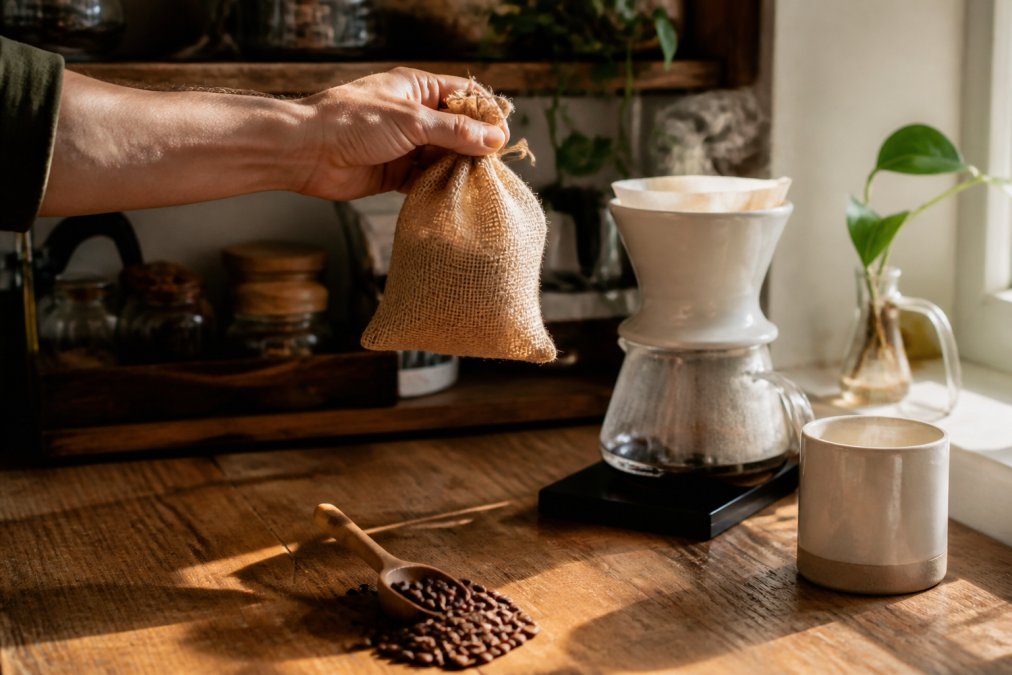
Quire Brew's single origins each carry a specific grower, region, altitude, and process on the label. The Colombia brings dried orange, berry, and chocolate notes from smallholder farms near Medellín. The Ethiopia Natural leans fruity and caramel-sweet from the Sidama zone. The Tanzania runs floral and bright, with pear and jasmine. Bali Blue is the dark-roast option: dark chocolate, molasses, brown sugar.
Match the Origin to the Recipient's Brew Method
Most gift guides stop at flavor notes, but the better filter is equipment, the same bean can taste thin or syrupy depending on how it's brewed. Use this decision tree:
- Pour-over (V60, Chemex, Kalita): Choose medium-light, washed or natural beans with clear acidity. Ethiopia Natural and Tanzania are the strongest picks here, their fruit and floral notes survive a slow, paper-filtered extraction. Avoid dark roasts; the filter mutes the smoke and leaves bitterness.
- Espresso and moka pot: Choose medium-dark to dark beans with low acidity and high solubility. Bali Blue is built for this, the molasses and brown sugar notes pull through as crema and body rather than sourness. A medium-light Ethiopia will often taste sharp and under-extracted on a home espresso machine.
- French press: Choose medium roasts with balanced body. Colombia is the safe, crowd-pleasing answer. The metal mesh filter lets oils through, so a medium roast tastes round rather than muddy.
- Drip machine: Choose medium roasts that tolerate a wide temperature range. Colombia or a medium-roast Bali Blue both work. Drip machines rarely reach the precise temperatures that make light roasts shine.
- Cold brew: Choose medium-dark or dark beans. Bali Blue's chocolate and molasses notes concentrate well over a 12- to 18-hour steep. Light roasts can taste tea-like and weak in cold brew.
What to Check on the Bag Before You Buy
Four facts separate a giftable single origin from a forgettable one:
- Printed roast date, not a "best by" date. Freshly roasted beans peak roughly one to three weeks after the roast date.
- Named origin or farm. "Colombia" alone is a country; "smallholder farms near Medellín" is traceability.
- Process, washed, natural, honey, or anaerobic. Natural and honey processes tend to be fruitier and sweeter; washed coffees are cleaner and more acidic.
- Altitude, usually printed in meters. Higher-grown beans (1,500 m and above) tend to be denser and more complex (The Growing Altitude Influences the Flavor Precursors, Sensory Characteristics and...).
If a bag lists none of these, it's a commodity product in specialty packaging.
Single Origin vs. Blend for Gifting
Single origins suit curious recipients who enjoy tasting something specific; blends suit daily drinkers who take milk or sugar, or when you don't know their preferences. A blend is engineered for consistency, a single origin for character, neither is better, they solve different problems.
That's the personalization most gift guides skip. Match the roast to the equipment and the gift lands immediately.
Sample Packs and Gift Sets That Let Them Taste Before Committing
Sample packs solve the hardest problem in gifting coffee: you rarely know what someone likes. Quire Brew's hold six 2-ounce bags, enough for several brews each, at $24.99.
Three options cover most recipients:
- Best Sellers Sample Pack ($24.99): 6Bean, Cowboy, Breakfast, Peru, Mexico, and Bali. The crowd-pleaser choice for someone whose preferences you can't guess.
- Single Origin Favorites Sample Pack ($24.99): Brazil Santos, Colombia, Costa Rica, Ethiopia, Honduras, and Tanzania. Best for the drinker who already reads tasting notes.
- Flavored Coffees Sample Pack ($24.99): French Vanilla, Hazelnut, Cinnabun, Caramel, Mocha, and Cinnamon Hazelnut. Built for someone who takes their coffee sweet.
Each pack arrives in 2-ounce portions, so nothing goes stale before it's brewed, a stronger first-time coffee gift than a single large bag.

Flavored and Barrel-Aged Beans for Adventurous Coffee Lovers
Flavored and barrel-aged beans suit the recipient who already owns a grinder and wants something they can't buy at the corner store.
Quire Brew's Whiskey Barrel Aged coffee is a single-origin Guatemalan aged 30 days in a bourbon barrel, then roasted to order. It's the pick for someone who enjoys spirits and coffee equally, with a character you won't find in a standard roast.

The flavored lineup runs French Vanilla, Hazelnut, Cinnabun, Caramel, Mocha, and Cinnamon Hazelnut, all built on specialty-grade single-origin coffee roasted in small batches to a smooth medium. Flavoring oils go on while the beans are still warm, so the result tastes integrated rather than artificial.
For a different kind of adventurous, the Coffee with Mushrooms line infuses specialty-grade coffee with Lion's Mane, Cordyceps, and Reishi in dark or medium roast at $20.99, for the recipient who already buys functional blends.
One caution: flavored and barrel-aged beans are best gifted to someone who grinds at home. The added flavor compounds fade faster once ground.
How to Store Coffee Beans for Freshness After the Gift Is Opened
Storing coffee beans well means four things: an airtight container, a cool dark spot, whole-bean form, and small quantities finished within a few weeks. Get those right and a gifted bag tastes as good in week three as on day one.
The enemies are oxygen, moisture, heat, and light. A vacuum-sealed or one-way-valve bag handles the first two until opened; after that, transfer beans to an airtight canister in a cupboard away from the stove, not on top of the fridge, where warmth and vibration live.
A Realistic Shelf-Life Timeline
- Days 1-3 after roast: Beans are degassing heavily. Flavor is often sharp or flat. Good for espresso, less ideal for pour-over.
- Days 4-14: Peak window. Aromatics are fully developed and the bean is still releasing carbon dioxide at a manageable rate.
- Days 15-30: Still good, but fruit and floral notes fade first. Chocolate and caramel notes hold longer.
- Days 30-60: Noticeably stale for filter brewing. Acceptable in milk drinks or cold brew.
- Beyond 60 days: Flat and papery. Not worth gifting.
This is why the roast date matters more than the "best by" date.
The Container Question
Three options, ranked by how well they actually preserve beans:
- The original bag with its one-way valve, folded and clipped, is genuinely good for the first week or two. The valve lets carbon dioxide escape without letting oxygen in.
- An opaque, airtight canister with a tight gasket is the best long-term home. Look for ceramic or stainless steel. Clear glass jars on the counter are the most common mistake, light degrades oils.
- A vacuum canister helps if you buy in bulk, but the pumping action exposes beans to air each time you open it. For a single gifted bag, it's overkill.
The Freezer Debate, Settled Practically
A Gift-Giver's Freshness Plan
If you're the one giving the coffee, you can do more than hand over a bag:
- Buy from a roaster that prints the roast date, and order close to the gift date
- Choose whole bean unless you know the recipient owns a grinder
- Include a small airtight canister as a paired gift, it costs less than a second bag and gets used every day
- Add a note with the roast date and a "best by" window you calculate yourself (roughly four to six weeks from roast)
- For sample packs, tell the recipient to open one 2-ounce bag at a time rather than all six
For a gift, the better move is buying fresh and drinking it fresh.
Pairing Coffee Gifts With Non-Coffee Items for a Complete Present
A bag of beans alone is a nice gesture. A bag paired with the right non-coffee item becomes a gift someone remembers, and pairing is where most coffee presents fall flat.
Match the accessory to the brewing method: a pour-over devotee gets a gooseneck kettle or scale, an espresso drinker a tamping mat or tamper, a drip drinker a good travel mug. Quire Brew carries branded mugs and apparel alongside its beans, so coffee and gear arrive as one coordinated set.
The principle is simple: give the tool that makes the beans taste the way they're supposed to. A $19 bag of Ethiopia Natural is wasted on a recipient with no grinder and a stale drip machine; add a grinder and the same bag becomes a genuine upgrade.
For a host gift or coworker exchange, a sample pack plus a mug hits the right note without knowing anything about their kitchen. For a close friend or partner, a full single-origin bag plus the accessory their setup is missing reads as thoughtful rather than generic.
That's the difference between buying coffee and giving it.
Gifting coffee well comes down to one hard question: do you know how the recipient brews? Most people don't, which is why so many gifted bags sit unopened. Quire Brew takes the guesswork out with artisan single-origin beans, barrel-aged and flavored roasts, and curated sample packs that let someone taste before committing. Every order is roasted with intent, delivered through fast automated fulfillment, and paired with premium branded gear that makes the ritual feel like a gift rather than a transaction. Subscribe to Quire Brew's emails and start building a coffee gift that actually gets used.
Frequently Asked Questions
What are the best coffee beans to give as a gift?
The best coffee beans for gifts match the recipient's brewing setup and taste. For pour-over drinkers, a medium-light single origin like Ethiopia Natural ($18.99) delivers fruity, caramel notes. For espresso fans, a dark or medium-dark option such as Bali Blue ($18.99) brings chocolate and molasses depth. If you are unsure, a sample pack like the Single Origin Favorites Sample Pack ($24.99) lets them try six origins before committing to a full bag.
How do you choose fresh coffee beans for a gift?
Check the roast date first, not the expiration date. Freshly roasted beans peak between 4 and 14 days after roasting, so a bag roasted within the past two weeks is ideal. Look for vacuum-sealed or one-way valve packaging, which keeps oxygen out while letting carbon dioxide escape. Single-origin beans with clear tasting notes and a named farm or region also signal higher quality than vague blends.
What makes coffee beans high quality enough to gift?
High quality coffee beans share a few markers: specialty-grade arabica, a specific origin or farm, a recent roast date, and consistent bean size and color. Processing method matters too. Fully washed beans tend to taste clean and bright, while natural-process beans like Ethiopia Natural bring fruity complexity. Altitude also plays a role, since beans grown above 1,200 meters typically develop denser, more flavorful profiles.
How should someone store coffee beans for freshness after receiving them?
Keep whole beans in an airtight, opaque container stored at room temperature, away from light, heat, and moisture, and grind right before brewing to preserve aroma and flavor.
What are some high-end coffee gift ideas beyond a single bag?
Pair coffee with non-coffee items to build a fuller present. A sample pack of six 2-ounce bags, a ceramic pour-over dripper, and a small scale create a complete brewing kit. You can also add a branded mug, a bag of flavored beans like French Vanilla or Hazelnut, or a whiskey barrel-aged option for someone who enjoys spirits. Curated selections feel more personal than a single bag and let the recipient explore.